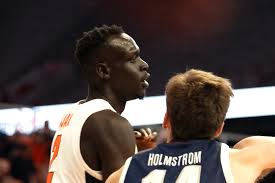
On March 6, 2026, Syracuse University's former men's basketball player John Bol Ajak was reportedly taken into custody by U.S. Immigration and Customs Enforcement (ICE) while residing in a state of homelessness. This incident has sparked widespread concern and debate over the intersection of student visas, academic athletics, and federal immigration enforcement. The detainment occurred at the Moshannon Valley Processing Center, a facility known for its role in processing individuals with immigration violations.
The incident highlights a growing tension between educational institutions and federal immigration authorities, particularly regarding athletes who hold student visas. John Bol Ajak, a former SU men's basketball player, was reportedly detained following an investigation into potential student visa irregularities. His situation has drawn attention to the complexities of the F-1 visa program, which allows international students to pursue academic and athletic pursuits in the United States.
According to sources, Bol Ajak was living in a precarious situation, having lost his student status after his basketball team's eligibility was questioned. This led to his homelessness and, ultimately, his detention by ICE. The case has raised questions about the adequacy of current protocols for monitoring student visa compliance, especially for athletes who often have unique career paths that intersect with both academic and athletic endeavors.
ICE officials have not yet released specific details about the nature of the investigation, but reports indicate that the detainment is linked to potential violations of student visa terms. Under the F-1 visa program, international students must maintain full-time enrollment in a school and adhere to specific requirements to avoid automatic termination of their status. The case has prompted calls for greater transparency and coordination between universities and immigration authorities to prevent similar incidents.
Advocacy groups have begun mobilizing to support Bol Ajak, emphasizing the need for a more robust system to protect international athletes who rely on student visas. The incident has also sparked discussions about the broader implications of immigration enforcement on student athletes, particularly those from countries with limited access to legal immigration pathways.
University administrators and student affairs departments have been scrambling to address the situation, with some expressing concern about the potential impact on student-athlete welfare and the integrity of academic programs. While the university has not publicly commented on the matter, this case has become a focal point in ongoing debates about the challenges faced by international students in the U.S. education system.
Legal experts caution that the detention of athletes under student visas is not uncommon, but this case is notable for the direct link to athletic performance and the immediate consequences of visa non-compliance. The incident underscores the critical need for clear guidelines and consistent oversight to ensure that international students, particularly those in high-profile sports programs, are not inadvertently harmed by the complexities of the immigration system.