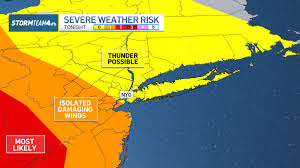
As spring transitions into early spring, New York and its surrounding regions are bracing for a shift in weather patterns. The latest forecast from the National Weather Service indicates that Wednesday will bring isolated severe weather threats, including damaging straight-line winds and small hail. These conditions are expected to peak in the afternoon, with temperatures dropping significantly by Thursday. This rapid weather change exemplifies the volatility that can occur in the Northeast, where spring weather is often unpredictable.
According to the National Weather Service, the severe weather threat is concentrated in parts of New Jersey, with isolated tornadoes and large hail potential. The primary concern for Wednesday is the potential for damaging winds and small hail, which could affect communities across the region. Residents in areas like Central Park are already experiencing a sharp temperature drop following a high of 80 degrees on Tuesday, the earliest recorded temperature for this time of year.
The National Weather Service has issued a severe weather advisory for parts of New Jersey and New York, warning of potential tornadoes and large hail. The forecast indicates that these threats are likely to be isolated, meaning they will not affect the entire region uniformly. However, the potential for tornadoes and large hail is a serious concern for residents in the eastern United States, particularly those in areas with less robust infrastructure.
Looking ahead to Thursday, meteorologists predict a potential snowfall in the region. While snow is not expected to be widespread, it could lead to minor disruptions in traffic and local transportation. The National Weather Service has warned that this snow could be mixed with other forms of precipitation, such as rain, creating a complex weather pattern. The timing of this snowfall is significant because it follows the severe weather threat, indicating a rapid shift in the weather system.
Experts at the National Weather Service emphasize the importance of staying informed about local conditions, as the potential for isolated severe weather and snow can vary significantly from one location to another. Residents should monitor local news and weather updates regularly, especially in areas that are prone to severe weather. The National Weather Service also recommends having an emergency kit ready, including items such as water, food, and basic medical supplies.
The weather pattern described is part of a larger trend of increasing weather variability in the Northeast. As spring arrives, the region experiences a mix of warm and cold air masses, leading to rapid changes in conditions. This variability is a natural part of the seasonal transition, but it can pose challenges for residents who are not prepared for sudden shifts in weather.
Residents should be prepared for potential disruptions to daily activities, including traffic and transportation. The National Weather Service advises that those who live in areas prone to severe weather should have a plan in place, including a communication plan with neighbors and family members. This proactive approach can help minimize the impact of severe weather events.