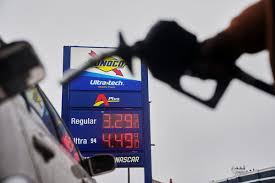
U.S. gas prices have reached unprecedented levels, with the national average for regular gasoline now standing at $3.413 per gallon, a significant increase of 14% over the previous week, according to the American Automobile Association. This sharp rise follows escalating tensions in the Middle East, particularly the recent conflict involving Iran, which has disrupted global oil and gas markets. The surge reflects broader economic challenges as supply chains face strain from geopolitical instability.
The immediate impact of the Middle East conflict has been felt across the United States, with gas stations reporting prices that have jumped by an average of 52 cents per gallon compared to the previous week. This increase has placed additional financial pressure on households and transportation-dependent industries, highlighting the interconnectedness of global events and domestic energy costs. The U.S. Department of Energy has warned that such volatility could lead to prolonged periods of high fuel costs for consumers.
Analysts attribute this price escalation to multiple factors, including the disruption of oil shipments from the Middle East, reduced production capacity in affected regions, and heightened demand for energy resources amid economic uncertainty. The conflict has created a ripple effect that has impacted not only domestic markets but also global energy prices, with implications for international trade and energy security.
Consumer impact is significant, as the average American household spends approximately $1,500 annually on gasoline, according to the U.S. Energy Information Administration. With prices now at $3.413 per gallon, this translates to an additional $200 per year in costs for a typical driver, a figure that could strain household budgets, particularly in regions with high vehicle usage.
Industry experts caution that the situation may worsen if the Middle East conflict continues to escalate. The U.S. Energy Information Administration reports that the country has a high dependency on imported oil, with nearly 70% of its petroleum supply coming from the Middle East. This dependency makes the nation vulnerable to disruptions in regional supply chains, further amplifying the impact of geopolitical events on domestic energy markets.
Government and industry stakeholders are working on contingency plans to mitigate the effects of these price increases. The federal government has recently allocated funds to assist consumers facing financial hardship due to rising energy costs, while the oil industry is exploring alternative energy sources to reduce reliance on volatile markets. However, these measures may take months to yield significant results.
Looking ahead, the situation remains fluid, with the potential for further price increases if the Middle East conflict continues to disrupt oil production and shipping routes. The U.S. Department of Energy has emphasized the need for diversified energy sources and strategic reserves to counteract future supply shocks, but for now, consumers are facing immediate financial consequences of the ongoing conflict.