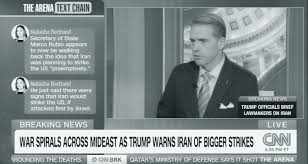
Scott Jennings, a prominent Republican strategist and CNN’s political commentator, has become the focal point of a growing controversy within the network and across MAGA media circles. His recent actions, particularly a viral tweet that amplified a dubious White House talking point about Iran, have sparked intense internal conflict at CNN and wider backlash in the conservative media ecosystem. According to internal reports obtained by Status, Jennings pushed a false claim about Iran’s potential unprovoked strike on U.S. forces during a closed-door briefing with congressional staff, only to be contradicted by CNN’s own investigative reporting. This incident highlights the deepening rift between influential MAGA figures and traditional news outlets amid escalating geopolitical tensions.
The incident unfolded when Jennings, known for his role as a political strategist and commentator, shared a tweet that aligned with a White House assertion that Iran was planning an unprovoked attack on U.S. military forces in the Middle East. The claim, which has been widely circulated by Trump administration allies, was later debunked by CNN’s in-house reporters. Internal documents indicate that Pentagon officials confirmed during briefings that there was no evidence of Iran’s intention to launch such an attack. Jennings’ tweet gained traction across MAGA platforms, amplifying a narrative that has since been challenged by mainstream media and political analysts.
The conflict has escalated into a broader MAGA media civil war, with Jennings being criticized by both supporters and critics within the network. Some within the network accuse him of acting as a ‘cosplayer’—adopting false narratives for political gain—while others defend his role in amplifying conservative messaging. This internal clash underscores the challenges faced by conservative media outlets in balancing ideological alignment with factual accuracy, especially as tensions with Iran continue to rise.
Analysts suggest that Jennings’ role as a political strategist has blurred the lines between editorial oversight and personal influence. His push for a White House talking point, which was later contradicted by CNN’s own reporting, has raised questions about the integrity of information shared by influential figures in conservative media. The incident has also highlighted the growing tension between traditional news organizations and the informal networks that dominate online discourse.
Experts warn that the fallout from this incident could have significant implications for how conservative media handles misinformation. As Jennings’ actions draw scrutiny from within CNN and beyond, the incident serves as a cautionary tale about the risks of adopting unverified claims without proper fact-checking. The broader context of U.S.-Iran relations, including the recent decision by the U.S. to stop funding the U.S. military’s training of Iranian-backed proxies, adds complexity to the situation.
Despite the backlash, Jennings remains a key figure in the conservative media landscape, with his ability to shape narratives on national security issues continuing to influence the discourse. The incident underscores the challenges of maintaining credibility in an environment where misinformation spreads rapidly through social media and traditional media platforms alike. As the debate over Iran’s intentions continues, the role of figures like Jennings in shaping public perception of critical geopolitical events will remain pivotal.