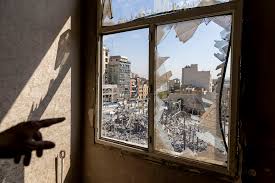
Beirut has become the epicenter of a rapidly intensifying conflict as the Iran war expands into Lebanese territory, with significant implications for regional stability and civilian safety. The recent escalation following the U.S.-led strikes on Iranian targets and Israeli military operations in the Beirut suburbs has triggered a cascade of diplomatic and security crises across the Middle East. This development marks a critical turning point in the broader conflict between Iran, Israel, and their respective allies, with Lebanon now bearing the brunt of the violence.
The immediate aftermath of the U.S. and Israeli military actions has left Beirut’s civilian infrastructure critically vulnerable. With key transportation networks and communication channels disrupted, the city faces unprecedented challenges in maintaining essential services. Local authorities have reported a surge in emergency calls, signaling a deteriorating situation for residents living near the conflict zones. The humanitarian impact is already visible, with hospitals overwhelmed and food distribution systems at risk of collapse.
Hezbollah’s recent warnings to Israeli civilians to evacuate towns within a 5-kilometer border zone have further complicated the security landscape. These threats, issued amid heightened military activity in the region, indicate a deliberate shift in the conflict’s dynamics. The group has been actively engaging in operations along the Lebanese-Israeli border, which has led to increased cross-border incidents and heightened fear among local populations. This escalation has created a dangerous environment where civilians are caught in the crossfire of competing national interests and strategic maneuvers.
The Iranian government’s promise of retaliation following the assassination of Ayatollah Ali Khamenei has intensified fears of a broader regional war. With the U.S. and Israel now actively targeting Iranian assets, Beirut has become a critical flashpoint for further escalation. The city’s strategic location, hosting diplomatic and military facilities, makes it a focal point for international negotiations and military operations. As tensions rise, the risk of a full-scale regional conflict increases, putting immense pressure on Lebanon’s fragile political and economic systems.
International observers have noted a significant rise in cross-border incidents, with evidence of increased military activity along the Lebanese-Israeli border. The New York Times has reported on the growing number of incidents, highlighting the urgency of the situation. The conflict has also drawn attention to the complex interplay between regional powers, with Lebanon’s position as a buffer state between Israel and Iran becoming increasingly precarious.
As the situation continues to evolve, the international community must address the immediate humanitarian and security concerns facing Beirut. The city’s role as a potential flashpoint for further escalation cannot be overstated. With diplomatic channels strained and military actions ongoing, the risk of a wider regional conflict remains high. The consequences of inaction could be severe, with Lebanon’s stability at stake.