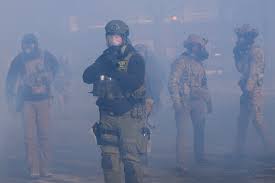
Federal Agents Continue in Minnesota Despite Border Czar's Shutdown Announcement

Editor 05 Mar, 2026 ... min lectura

Minnesota's border security operations have faced significant challenges following a recent announcement by the Border Czar that the federal border enforcement operation would cease. According to reports from the Star Tribune, close to 650 federal agents remain stationed in the state weeks after the shutdown was declared, raising questions about the implementation and effectiveness of the policy change.

The decision to end the federal border operation came as a result of a strategic shift in national security priorities, with the Department of Homeland Security emphasizing a more collaborative approach to border management. However, the prolonged presence of these agents suggests a potential gap between policy announcement and operational execution. Analysts suggest that the delay may stem from logistical complexities and the need for state and federal agencies to coordinate seamlessly.

Minnesota's geographic location at the intersection of multiple border regions has made it a critical focus for federal agencies. The state's role in handling cross-border traffic, including agricultural exports and international trade, adds another layer of complexity. Local officials have noted that the continued presence of federal agents is necessary to address emerging threats, such as increased smuggling activities and unauthorized crossings, which have seen a slight uptick in recent months.

State and federal officials have yet to provide a clear timeline for the full transition of border operations. This ambiguity has led to confusion among local law enforcement and community stakeholders. The Star Tribune reports that some agencies are attempting to fill the void left by the reduced federal presence with increased local patrols, but these efforts have not yet fully offset the gaps in federal oversight.

As the situation evolves, stakeholders are calling for a more transparent communication process between federal and state authorities. Experts suggest that the current approach may require additional training and resource allocation to ensure that the transition is smooth and effective. The ongoing presence of nearly 700 federal agents highlights the complexity of border security and the challenges of rapidly adjusting to policy changes.