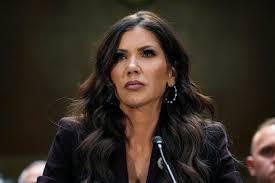
President Donald Trump's administration is reportedly under pressure to address the growing rift between the White House and Homeland Security Secretary Kristi Noem following her testimony before the Senate Judiciary Committee on March 3. According to multiple sources close to the administration, Trump has become increasingly frustrated with Noem's performance during the hearing, which reportedly highlighted significant gaps in her understanding of critical homeland security policies. This development has intensified discussions within the Republican Party about potential replacements for the DHS secretary, with some lawmakers suggesting that a high-profile figure like Rep. Marjorie Taylor Lewis could also be considered.
The Senate Judiciary Committee hearing, which focused on the administration's approach to border security and domestic terrorism threats, revealed that Noem struggled to articulate a coherent strategy for addressing emerging challenges in the Department of Homeland Security. Several Republican senators expressed concern that her testimony lacked specificity and failed to address critical issues such as the integration of federal cybersecurity protocols with state-level initiatives. This perceived disconnect has raised questions about the effectiveness of the current DHS leadership, particularly given the ongoing national security threats that require precise, actionable policies.
Multiple Republican lawmakers have privately acknowledged that Trump's dissatisfaction with Noem's testimony has escalated to the point where he is now considering her replacement. Sources indicate that the White House has begun exploring potential candidates, including Rep. Marjorie Taylor Lewis and former U.S. Attorney General Jeff Sessions, who have strong ties to the Republican base and significant expertise in national security matters. These potential replacements are being evaluated based on their ability to address the administration's priorities, particularly the need for more robust coordination between federal and state authorities on critical infrastructure protection.
The situation has also drawn attention to the broader implications of the DHS's role in national security policy. With the Department of Homeland Security responsible for a wide range of critical functions, including counterterrorism, border security, and cybersecurity, the leadership's effectiveness has become a focal point for congressional oversight. The administration has defended Noem's performance, arguing that she has made progress in addressing key issues such as the recent surge in cyberattacks targeting critical infrastructure, but critics argue that her testimony did not adequately address the challenges posed by evolving threat landscapes.
Analysts suggest that the potential dismissal of Noem could signal a shift in the administration's approach to appointing DHS leadership, emphasizing the need for more hands-on experience with complex national security issues. This move would also likely impact the department's ability to coordinate with state and local governments, which have been critical partners in implementing federal policies on issues like emergency response and disaster management.
As the debate over Noem's role continues, the White House has maintained that it is still evaluating the situation and that no final decision has been made. However, the growing tension between Trump and Noem has raised concerns about the stability of the DHS under a Trump administration, particularly given the increasing complexity of national security challenges that require a cohesive and well-informed leadership team.