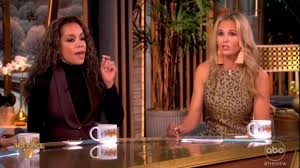
On March 4, the daytime talk show The View featured a contentious discussion that drew significant attention as guest host Elisabeth Hasselbeck found herself at the center of a heated debate over Kristi Noem’s controversial testimony before Congress. The episode, which focused on Noem’s remarks regarding immigration policy and her defense of the Trump administration’s approach to federal immigration, quickly turned contentious when the host defended Noem’s stance despite widespread criticism of her testimony. The episode highlighted the deepening divide between conservative and progressive perspectives on immigration, particularly concerning the role of federal immigration agents in recent incidents involving civilian casualties.
During the segment, Hasselbeck responded to questions about the recent deaths of civilians in Minneapolis linked to federal immigration agents, stating: 'I love dogs, I love people. I think all lives matter to God, and we’re in uncommon times, so we need to have uncommon sense about things like this.' Her comments were met with immediate pushback from fellow panelists, who questioned her alignment with the broader context of public safety and the ethical implications of federal immigration enforcement. The episode revealed a stark contrast between the host’s emphasis on 'all lives matter' and the reality of specific incidents where federal agents have been implicated in civilian deaths.
Hasselbeck’s defense of Noem’s testimony—arguing that 'there will be mistakes made'—drew sharp criticism from viewers and critics alike, particularly those who highlighted the direct consequences of aggressive immigration enforcement tactics. The backlash was amplified by the fact that the incident occurred in a city with a history of tensions between local authorities and federal agencies, where accountability for civilian harm has been a recurring issue. The episode underscored the challenges of balancing national security concerns with the human impact of policy decisions, a tension that has become increasingly visible in recent months.
While Hasselbeck has long been a prominent figure in American media, this episode marked a significant moment in her career, illustrating the complexities of representing political positions in a polarized environment. Her comments about 'all lives matter' and the need for 'uncommon sense' during a time of crisis have raised questions about the role of media figures in shaping public perception of high-stakes policy debates. The episode also highlighted the broader implications of how media platforms can influence the interpretation of critical policy issues, especially when they involve sensitive topics like immigration and national security.
The incident has sparked discussions about the ethical responsibilities of public figures, particularly those who hold influential positions in media and politics. As debates over immigration continue to intensify, the episode serves as a reminder of the importance of nuanced dialogue and the need for accountability in policy discussions. The incident also reflects the growing tension between the government’s approach to immigration and the communities affected by its implementation.
In the aftermath of the episode, critics have called for a more thorough investigation into the specific incidents involving federal agents and civilian casualties. The episode also highlighted the challenges of navigating complex political issues in a way that respects the diverse perspectives of different stakeholders. The episode’s outcome has set the stage for further discussions about the role of media in policy debates, the ethical responsibilities of public figures, and the need for transparency in high-stakes policy decisions.