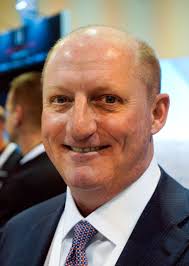
Berkshire Hathaway CEO Greg Abel Addresses Declining Insurance Profits Amid Strategic Shifts

Editor 05 Mar, 2026 ... min lectura

Berkshire Hathaway’s chief executive, Greg Abel, recently confronted a significant challenge in the company’s financial performance during his first report to shareholders. The conglomerate reported lower 2025 underwriting and investment income for its insurance and reinsurance operations, a stark departure from the previous two years of rising underwriting profits. This development comes as Abel takes over from Warren Buffett, who has stepped down as the company’s primary figurehead.

Abel’s letter to shareholders highlighted a complex picture for GEICO, Berkshire’s largest insurance subsidiary, which accounted for over 50% of the $1.9 billion year-over-year decline in pretax underwriting profits across the company’s property and casualty units. The company’s combined ratios, a measure of profitability in insurance, have risen across all segments—personal lines, commercial lines, and reinsurance—indicating a slowdown in the traditional revenue model that once fueled Berkshire’s growth.

While the insurance segment has remained profitable overall, the decline in underwriting income has raised questions about the sustainability of Berkshire’s core insurance business. Abel acknowledged that the company’s insurance operations, which have been a cornerstone of Berkshire’s strategy for decades, are experiencing structural changes. He attributed the shift to evolving market dynamics, including increased competition and a more volatile risk environment, which have impacted the company’s ability to generate consistent underwriting returns.

Notably, Abel’s report emphasized a broader strategic pivot for Berkshire, moving beyond its historical reliance on insurance to diversify into new markets. The company has recently begun repurchasing shares and, according to CNBC, CEO Greg Abel himself purchased $15 million in stock—a move that signals confidence in the company’s long-term value, despite short-term challenges in the insurance segment.

In addition to the insurance challenges, Abel’s letter omitted major financial institutions like Bank of America and Chevron from his list of holdings, a decision that has drawn attention from investors. This omission, as reported by Yahoo Finance, reflects a more nuanced approach to portfolio management, prioritizing stability and alignment with Berkshire’s evolving risk profile over traditional sector concentrations.

Abel’s leadership has been marked by a focus on operational efficiency and strategic realignment. While the insurance segment faces headwinds, the company’s other divisions, including its vast portfolio of investments and long-term holdings, continue to deliver strong returns. This balancing act between preserving legacy assets and adapting to new market realities is critical for Berkshire’s future trajectory.