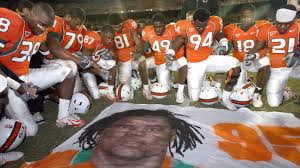
Rashaun Jones, a former University of Miami football player, is currently embroiled in a high-profile legal battle following a mistrial declaration in a murder case tied to the 2006 fatal shooting of teammate Bryan Pata. The case has drawn significant attention due to its connection to the University of Miami Hurricanes program and the historical significance of the victims and defendants. According to court documents, the trial began with a jury that was unable to reach a unanimous verdict, prompting the judge to declare a mistrial.
The mistrial occurred after jury deliberations stalled, with jurors unable to agree on whether Rashaun Jones should be found guilty of the fatal shooting of Bryan Pata. The case centers around a tragic incident that took place outside Pata's apartment in southwest Miami-Dade in November 2006. Jones, who was a teammate of Pata at the University of Miami, has been under scrutiny since the incident, which has been linked to a broader context of violence and tension within the university's football program.
Legal experts have noted that the mistrial highlights the complexities of jury deliberation in high-stakes cases involving athletes and their connections to academic institutions. The University of Miami has a history of fostering strong athletic and academic programs, but this case has brought to light issues of accountability and the potential for conflicts of interest between sports and legal proceedings. The mistrial decision has raised questions about the effectiveness of the jury system in cases where the defendant has ties to a major university program.
The case began with an initial investigation that focused on the circumstances surrounding Pata's death. The prosecution argued that Jones was involved in a premeditated act, while the defense emphasized the difficulty of proving intent beyond a reasonable doubt. The mistrial decision has led to calls for a reevaluation of the evidence and a more thorough examination of the timeline and evidence from the original investigation.
Legal analysts suggest that the mistrial could lead to a more thorough review of the evidence, particularly the role of social media and digital communications in establishing a clear timeline of events. The case has also been noted for its implications on the broader issue of how the university community handles sensitive matters involving its athletes and their personal lives.
With the mistrial, the case has shifted to a new phase, where the jury may need to revisit the evidence and potentially re-examine the role of the University of Miami in the incident. This case has significant implications for the university's reputation and its relationship with the legal system, especially given the high-profile nature of the case and the involvement of a former player who was a prominent figure in the university's football program.
As the legal process continues, the outcome of this case could set a precedent for how universities handle similar incidents involving their athletes, particularly those with ties to the broader community. The mistrial decision has also raised questions about the role of the jury in cases involving athletes and their potential connections to institutional programs.