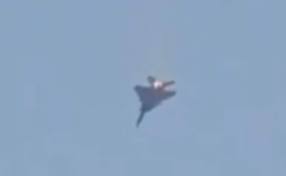
Iran Shares Video of F-15 Fighter Jet Spiralling and Crashing in Kuwait

Editor 02 Mar, 2026 ... min lectura

Recent reports indicate that Iran has shared footage of an F-15 fighter jet spiralling and crashing in Kuwait, raising concerns about regional tensions and the complex dynamics of military operations in the Middle East. The incident, which has been widely reported by multiple media outlets, has sparked significant debate among analysts and policymakers regarding the potential implications of such an event in a region already fraught with geopolitical instability.

The footage, reportedly captured by Iranian authorities, shows an F-15 aircraft deviating from its normal flight path and experiencing a rapid descent before crashing into a remote area of Kuwait. Initial assessments suggest the aircraft may have been involved in a collision or malfunction, though the exact cause remains under investigation. The incident has been linked to heightened military activity in the region, particularly following recent escalations between Iran and its regional adversaries, including the United States and its allies.

According to sources close to the incident, the crash occurred during a routine training exercise or an unexpected encounter with a hostile aircraft, though the identities of the pilots and the precise circumstances are still unclear. The video footage, which has been shared on social media platforms, has been described by some as a potential example of friendly fire, given the proximity of the incident to the Kuwaiti military's air defense systems.

Iranian officials have not yet commented on the incident, but the government has previously been known to share footage of military operations to demonstrate its capabilities and deter potential adversaries. The timing of the incident coincides with ongoing military tensions between Iran and its regional rivals, including the United States and its allies in the Gulf Cooperation Council. Analysts suggest that such incidents could be used by Iran to signal its military strength or to disrupt regional operations.

The incident has raised questions about the safety of military operations in the region and the potential for miscommunication or accidental clashes between different forces. Kuwait, a key ally of the United States in the Middle East, has a well-established air defense network that is designed to protect against potential threats from neighboring countries. However, the incident has also highlighted the challenges of maintaining interoperability between different military forces in a complex and rapidly evolving geopolitical landscape.

International observers have noted that similar incidents have occurred in the past, often involving misidentified aircraft or communication errors. In some cases, such events have led to significant diplomatic fallout, while in others, they have been resolved through coordinated efforts between the involved parties. The current incident has not yet been officially confirmed by the United States or Kuwaiti authorities, but it has prompted calls for transparency and further investigation into the circumstances surrounding the crash.

As the situation continues to unfold, the incident serves as a reminder of the delicate balance between military readiness and the potential for unintended consequences in high-stakes military operations. The lack of immediate confirmation from the involved parties has led to speculation about the nature of the incident, with some analysts suggesting that it could be linked to broader regional tensions or a complex mix of factors, including technical malfunctions or accidental encounters.