USS Abraham Lincoln Leads First Wave of U.S.-Israel Joint Operations Against Iran

Editor 02 Mar, 2026 ... min lectura

The United States and Israel launched a significant military operation against Iran on Saturday, February 28, 2026, with the San Diego-based nuclear-powered aircraft carrier USS Abraham Lincoln playing a central role in the initial strike wave. As one of the most advanced Nimitz-class carriers in the U.S. Navy, the Abraham Lincoln has historically been deployed in high-stakes regional conflicts, including combat operations in the Middle East. This operation, conducted from the Indian Ocean, involved multiple phases of coordinated air and naval actions targeting Iranian military assets, marking a critical escalation in U.S.-Israel joint operations in the region.

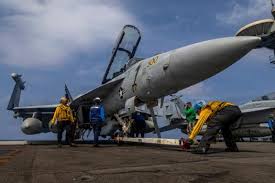
According to military reports, the USS Abraham Lincoln, a veteran of numerous global conflicts, deployed its Boeing EA-18G Growler aircraft to conduct precision strikes against Iranian targets. The carrier’s strategic positioning in the Indian Ocean allowed it to launch a critical wave of attacks that disrupted Iranian military capabilities. With its advanced technology and extensive combat experience, the Abraham Lincoln has been instrumental in maintaining U.S. naval dominance in critical maritime regions, particularly in response to regional threats.

The operation, described by officials as a 'major combat operation,' was executed with precision and coordination between U.S. and Israeli forces. The USS Abraham Lincoln’s role in this mission highlights its status as a key asset in the U.S. military’s ability to project power globally. The carrier’s deployment underscores the growing strategic partnership between the United States and Israel in addressing regional security concerns, particularly in light of ongoing tensions with Iran.

Analysts note that the Abraham Lincoln’s involvement in this operation reflects a broader shift in U.S. military strategy, emphasizing joint operations with allied nations to counter emerging threats. The carrier’s ability to rapidly deploy advanced aircraft and coordinate with other naval assets has been a critical factor in its effectiveness. This operation also highlights the evolving nature of modern naval warfare, where speed, precision, and coordination are paramount.

The USS Abraham Lincoln, with its extensive history of deployments and combat readiness, has become a symbol of U.S. military strength and adaptability. Its participation in this operation demonstrates the U.S. commitment to maintaining regional stability and countering potential threats from adversarial nations. The carrier’s advanced systems and experienced crew have enabled it to execute complex missions under high-pressure conditions, contributing to the success of the joint operation.

As this operation unfolds, the role of the USS Abraham Lincoln in such high-stakes missions continues to be a focal point for military analysts. Its deployment highlights the strategic importance of naval assets in modern military operations, particularly in regions where rapid response and precision strikes are essential. The carrier’s ability to operate in remote and challenging environments remains a critical component of U.S. military strategy.