Trump’s Diplomatic Push and Military Posturing: The Iran Conundrum in the State of the Union

Editor 28 Feb, 2026 ... min lectura

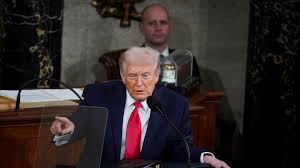
President Donald Trump’s recent State of the Union address has ignited intense debate over U.S. strategy toward Iran, highlighting a stark tension between his advocacy for diplomacy and a growing emphasis on military preparedness. As the United States mobilizes military assets near Iranian shores, Trump framed his approach as a balancing act between diplomatic engagement and readiness for potential conflict.

During his address, Trump emphasized that while he personally favors diplomatic solutions, he has accused Iran of violating international agreements by pursuing nuclear reenrichment and developing long-range missiles capable of striking U.S. territory. He cited recent U.S. and Israeli airstrikes as having 'totally obliterated' Iran’s nuclear program, though critics argue these actions have not fully addressed the threat of Iranian missile capabilities.

Trump’s rhetoric has drawn sharp reactions from both allies and adversaries. On one hand, his focus on diplomacy aligns with his broader campaign promise to restore pre-2018 U.S. engagement with the Joint Comprehensive Plan of Action (JCPOA). On the other, his threat of military action against Iranian missile development signals a significant escalation in U.S. military posture along the Persian Gulf.

Analysts suggest that Trump’s dual approach reflects a strategic ambiguity aimed at pressuring Iran while avoiding direct confrontation with key allies. By positioning himself as a decisive leader who can negotiate without compromising national security, he seeks to justify increased military spending and justify his administration’s hardline stance on Iran.

The implications of this pivot are profound. If Iran proceeds with missile development as Trump claims, the U.S. could face a rapid escalation in regional instability. Conversely, if diplomatic efforts succeed, the U.S. might avoid costly military engagements. However, the current trajectory suggests a high-risk, high-reward strategy that leaves little room for compromise.

As the U.S. prepares for potential military action, the effectiveness of Trump’s diplomatic outreach remains uncertain. His ability to balance these competing priorities will determine whether the U.S. can mitigate the threat posed by Iran’s military buildup.