What Is a Blue Alert? Understanding the Critical Emergency Signal in Law Enforcement

Editor 27 Feb, 2026 ... min lectura

Blue Alerts represent a critical emergency communication system used by law enforcement agencies across the United States. This system is designed to provide immediate, real-time information about potential threats that require urgent public safety intervention. When a Blue Alert is issued, it signals that a law enforcement officer is in grave danger or has been involved in a violent incident that could pose significant risks to public safety.

Under the National Incident Management System, Blue Alerts serve as a proactive measure to mobilize resources and coordinate responses during high-risk situations. These alerts are typically activated when a law enforcement officer is the victim of a violent crime, particularly when there is a suspected armed suspect who poses a significant threat to public safety. The Blue Alert system enables emergency responders to quickly identify and locate individuals who might be involved in critical incidents, allowing for a faster and more coordinated response.

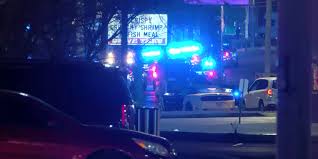
Recent developments have highlighted the importance of the Blue Alert system in addressing urgent public safety concerns. For instance, in a recent incident in Memphis, Tennessee, the Memphis Police Department (MPD) issued a Blue Alert after a police officer was seriously injured in a shooting incident in Parkway Village. This incident prompted a massive deployment of law enforcement resources, including multiple units of the Tennessee Bureau of Investigation (TBI) and other local agencies, to the scene of the incident at Regional One Hospital.

The Blue Alert system works through a combination of digital and traditional communication channels. In the Memphis case, the alert was disseminated via multiple platforms, including television broadcasts, social media, and emergency notification systems. The system ensures that the public is promptly informed about the ongoing emergency, enabling residents to take necessary precautions and avoid potential danger.

The implementation of the Blue Alert system has been a subject of debate regarding its effectiveness and potential misuse. While some critics argue that the system can lead to unnecessary panic or misinformation, proponents emphasize its critical role in ensuring timely and coordinated emergency responses. In the Memphis incident, the system facilitated a rapid response by multiple agencies, including the TBI, which was actively searching for the suspect in the area.

One of the key features of the Blue Alert system is its ability to provide detailed, real-time information about the incident. This includes specific locations, time frames, and potential risks to public safety. In the Memphis case, the alert detailed the heavy law enforcement presence along South Perkins Road near Cottonwood Road, indicating the severity of the situation and the need for immediate action.

As a critical tool for public safety, the Blue Alert system continues to evolve. Recent incidents, such as the one in Memphis, demonstrate the system's potential to save lives by enabling swift and coordinated emergency responses. The system's effectiveness is often measured by how quickly and accurately it can provide information to the public and emergency responders.

Looking ahead, the Blue Alert system will likely continue to play a vital role in addressing complex public safety challenges. Its continued refinement and adaptation to new threats will be crucial for maintaining public safety and ensuring that emergency responses are both timely and effective.