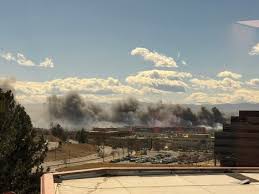
Firefighters responded to a rapidly spreading grass fire near Pinnacle Charter High School in Thornton, Colorado, on Wednesday, February 25, 2026, triggering widespread evacuations and the closure of key transportation routes. The incident, which began at approximately 12:30 p.m. MST, quickly escalated as flames engulfed properties surrounding the high school, prompting immediate action from local emergency services.
Authorities declared a Level 1 Emergency at the scene, indicating an immediate threat to life. Emergency crews deployed from multiple jurisdictions, including the Thornton Fire Department and Denver Fire Department, to contain the fire and ensure public safety. The fire, initially reported as a small grass fire, grew unexpectedly large within the first hour, forcing the evacuation of nearby residential areas and educational institutions.
By 1:00 p.m., the closure of northbound lanes of Interstate 25 between Colorado 224 and 70th Avenue became a critical response measure. This closure, affecting both directions of the highway, disrupted regional travel and created significant challenges for commuters and emergency responders alike. The closure was implemented to prevent further spread of the fire, which had already impacted several neighborhoods in the north Denver metro area.
The fire's proximity to Pinnacle Charter High School and surrounding commercial zones highlighted the vulnerability of urban areas to wildfire threats. Residents in the vicinity of 8412 Huron Street reported seeing a large plume of black smoke rising into the sky, visible across the Denver metropolitan region. Local officials confirmed that the fire was initially contained to the immediate area but required rapid intervention due to wind conditions and dry vegetation.
Emergency personnel worked tirelessly to protect critical infrastructure and ensure the safety of school and community facilities. The evacuation order for Pinnacle Charter High School, which is a key educational institution in the area, was issued to protect students and staff from potential hazards. This decision underscored the interconnectedness of fire safety protocols and school safety measures in emergency management.
As the fire continued to spread, residents were advised to evacuate immediately, with warnings issued through multiple channels including social media, emergency alerts, and local police broadcasts. The incident demonstrated the importance of early detection systems and community coordination in wildfire response efforts.
Fire officials noted that the fire's growth rate was influenced by high winds and low humidity levels, typical conditions in the spring in the region. The lack of immediate access to water sources also complicated containment efforts, though the fire remained relatively small compared to larger wildfire events in recent history.
While the fire did not pose an immediate threat to the broader metropolitan area, the rapid response by local fire departments and the timing of the evacuation highlighted the need for robust emergency protocols in fire-prone regions. The incident serves as a reminder of the potential for small fires to escalate quickly under specific weather conditions.
Community leaders are now focusing on post-incident analysis to improve preparedness for future fire events. This includes enhancing monitoring systems, improving water access for fire suppression, and developing more effective evacuation procedures for school and community facilities.