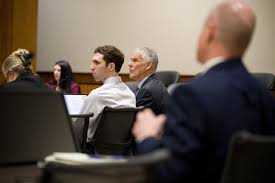
Judge Rejects Motion to Disqualify Prosecutors in Charlie Kirk Shooting Case

Editor 25 Feb, 2026 ... min lectura

On February 24, 2026, a Utah federal judge denied a motion to disqualify prosecutors in the high-profile case involving Tyler Robinson, the individual accused of attempting to shoot Charlie Kirk, a prominent conservative activist, at a university campus in Utah. This decision comes amid significant legal and political tensions surrounding the case, which has drawn attention from both conservative and liberal factions of the U.S. political landscape.

The case centers on allegations that Tyler Robinson, a 24-year-old man from Salt Lake City, attempted to shoot Charlie Kirk, a well-known conservative commentator and activist, during a public event at a university campus in Utah. Prosecutors have been working to build a case against Robinson for the alleged incident, while defense attorneys have been challenging the prosecution's credibility and the qualifications of the key legal figures involved.

Defense attorneys, led by prominent legal figure Jonathan Turley, have been focusing on questioning the impartiality of the prosecutors. Turley, a notable defense strategist, claims that the prosecutors have a history of bias against conservative causes, particularly those involving conservative activists. His argument centers around the idea that the prosecutors' actions could be influenced by political motivations rather than a strict adherence to the law.

The judge's decision to reject the motion to disqualify prosecutors has significant implications for the ongoing legal battle. This ruling means that the prosecution team will continue to handle the case, which has the potential to influence the outcome of the trial and the broader narrative surrounding the case.

Legal experts have noted that this decision reflects a growing trend in federal courts where prosecutors are increasingly scrutinized for potential political bias. The case has become a focal point for debates about the role of the judiciary in balancing political considerations with the legal process.

The case has also sparked national conversations about the intersection of law enforcement, political bias, and the protection of civil liberties. With the judge's decision to maintain the prosecution team, the focus now shifts to the next phase of the trial, which could see further challenges to the prosecution's credibility.

The defense team has indicated that they will appeal the decision, arguing that the prosecutors' actions have been inconsistent with the standards of fair and impartial legal proceedings. This appeal could lead to a reevaluation of the entire case, potentially resulting in a change in the prosecution team or a more thorough review of the evidence.

As the case progresses, it remains to be seen how the judge's decision will impact the broader legal and political landscape. The outcome could set a precedent for future cases involving similar allegations of political bias in the legal system.