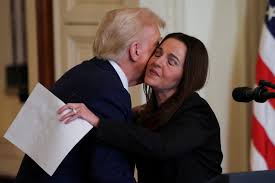
President Donald Trump's upcoming White House ceremony honoring 'angel families' has sparked widespread debate across the United States. The event, scheduled for Monday at 10 a.m. EST, aims to recognize families who have experienced loss due to the deaths of loved ones at the hands of undocumented immigrants. This initiative has become a focal point in the ongoing national conversation about immigration policy and its impact on communities nationwide.
The ceremony will specifically honor the families of victims such as Laken Riley, a 22-year-old student who was tragically killed in Georgia in 2022. Laken Riley's mother, who has been vocal about the incident, is among those set to receive recognition. The event represents a significant moment in the administration's efforts to address the complex dynamics of immigration-related violence, though critics argue that the terminology used to describe these families may perpetuate harmful stereotypes.
Proponents of the initiative highlight the emotional significance of the ceremony as a way to acknowledge the resilience of families living through traumatic experiences. They emphasize that the term 'angel families' is intended to convey respect and gratitude for these families who have shown remarkable strength in the face of adversity. Supporters argue that the recognition serves as a platform to foster greater understanding and solidarity within communities affected by immigration-related violence.
Opponents, however, contend that the term 'angel families' is misleading and potentially stigmatizing. They argue that labeling families as 'angels' for their perceived moral superiority could lead to further marginalization of these families and their struggles. Critics also warn that the ceremony could inadvertently reinforce the narrative that all undocumented immigrants are inherently violent, which has been a recurring theme in political rhetoric surrounding immigration.
The White House ceremony has drawn attention to the broader issue of immigration-related violence, particularly cases where undocumented immigrants are alleged to commit crimes against American citizens. While the administration has not provided detailed statistics on the number of such incidents, advocates for immigrant rights emphasize the importance of addressing systemic issues such as poverty, lack of access to healthcare, and inadequate protection mechanisms for vulnerable populations.
As the ceremony approaches, the public is divided on the meaning and implications of the 'angel families' initiative. Some community leaders have called for a more nuanced approach to recognizing the complexities of immigration and its impact on individual families, while others see the event as a critical step toward healing and reconciliation.
Regardless of the outcome, the ceremony underscores the deepening divisions in American society regarding immigration and its role in shaping community safety and national identity. The White House's decision to host this event highlights the ongoing tension between national security concerns and the need for compassionate, evidence-based policies that protect the rights of all citizens.