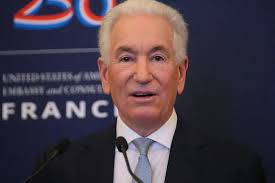
France Moves to Restrict Access to U.S. Ambassador Charles Kushner Following Alleged Disregard for French Government Protocols

Editor 23 Feb, 2026 ... min lectura

France has taken decisive action against U.S. Ambassador Charles Kushner, barring him from direct government access following reports that he skipped a scheduled meeting with French officials. The move, announced by French Foreign Minister Jean-Noël Barrot on February 6, 2026, underscores growing tensions between the two nations amid a complex diplomatic landscape. The incident occurred during a critical period of bilateral cooperation, particularly concerning issues of national security and international law. The French government cited a breach of diplomatic protocols as the immediate cause for this action, which has sparked widespread analysis of the implications for transatlantic relations.

According to multiple diplomatic sources, Ambassador Kushner's absence from a scheduled meeting with French Foreign Minister Jean-Noël Barrot and key government officials on February 6, 2026, was deemed a significant violation of established diplomatic norms. The meeting had been arranged to address concerns raised by French authorities regarding recent incidents involving violent left-wing activism in France. The French government has emphasized that such actions by U.S. officials can undermine the stability of bilateral relations and jeopardize ongoing collaborative efforts in counterterrorism and other critical areas.

The decision to restrict Ambassador Kushner's access to French government officials reflects a broader context of strained relations between France and the United States. This incident is part of a larger pattern of diplomatic friction that has emerged since the 2025 U.S. presidential election, which saw heightened tensions over the role of foreign interference and national security threats. French officials have repeatedly expressed concerns about the U.S. government's approach to domestic and international security issues, particularly in light of recent events involving the Paris attacks and other similar incidents.

French Foreign Minister Jean-Noël Barrot's statement highlighted the importance of adhering to diplomatic protocols and the necessity for mutual respect in international engagements. He emphasized that the U.S. government's actions, including the categorization of violent left-wing activism as a public safety threat, have led to a breakdown in communication channels. The French government has made it clear that such breaches of protocol can have serious consequences for the smooth functioning of diplomatic channels and the overall stability of bilateral relations.

The incident has raised questions about the effectiveness of diplomatic communication between the two nations. Analysts suggest that this move could signal a shift in the dynamics of U.S.-French relations, particularly regarding the handling of sensitive security issues. The French government has indicated that it will continue to monitor the situation closely and take further steps if necessary to ensure the safety and security of its citizens and officials.

As the situation develops, the international community is closely watching how this incident impacts the broader diplomatic landscape. The French government has called for increased transparency and adherence to established diplomatic norms to prevent further disruptions to bilateral cooperation. The U.S. government has yet to respond publicly to the decision, but diplomatic channels remain open for further dialogue.