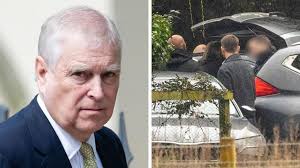
The arrest of Andrew Mountbatten-Windsor, the Duke of York, on suspicion of misconduct in public office has sent shockwaves across the monarchy and global media. This event marks the first time a senior royal has been taken into custody under such charges in modern history. The move, executed by Thames Valley Police, signals a significant shift in the relationship between the British monarchy and the legal system.
Andrew Mountbatten-Windsor, known for his close ties to Jeffrey Epstein, has been a subject of intense scrutiny for years. His connection to Epstein's network has been documented through multiple sources, including the U.S. Department of Justice and public records. The arrest, which occurred at his residence in Sandringham Estate, highlights the complexities of high-profile legal cases involving royal family members.
Thames Valley Police confirmed that the arrest was conducted in accordance with routine practice, as per the National Police Chiefs' Council. The operation involved unmarked vehicles arriving at the royal estate early Thursday morning, a move that has raised questions about the coordination between royal security and law enforcement.
King Charles III's response to the arrest has been notable, stating, 'Law must take its course,' a phrase that underscores the monarchy's commitment to the rule of law despite the political implications. This statement has been widely interpreted as a non-accusatory acknowledgment of the legal process, emphasizing the separation of royal duties from personal legal matters.
Analysis of the arrest operation reveals a sophisticated planning phase. Police used unmarked cars, a tactic previously employed in high-profile cases involving royal family members. The timing of the arrest, just days after a major news conference about Epstein's connections, has raised questions about the speed and coordination of the investigation.
The arrest has sparked international reactions, with media outlets across the globe tracking the developments. The New York Times and CNN have highlighted the broader implications of this case, linking it to the larger Epstein scandal and the accountability of those involved in his network.
The case has also brought attention to the challenges of balancing royal privacy with public scrutiny. The monarchy's longstanding tradition of discretion has been tested by this unprecedented move, which has prompted calls for transparency and accountability.
As the investigation unfolds, the focus remains on the legal process and its implications for the royal family. The arrest of a senior royal figure underscores the evolving nature of public accountability, even within the highest echelons of British society.