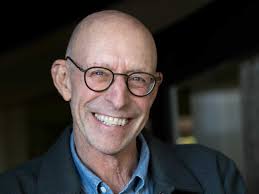
Michael Pollan, a renowned author and professor at the University of California, Berkeley, has recently addressed the growing debate around artificial intelligence and consciousness. In his latest book, A World Appears, Pollan explores the complex relationship between human thought and the emergence of artificial intelligence. The book delves into the fundamental question: can machines truly think or become conscious?
Pollan’s research reveals a critical distinction between the phenomenon of 'thinking' and the state of consciousness. While AI systems can simulate cognitive processes, they lack the subjective experience that defines consciousness. He argues that consciousness is not merely a computational process but a deeply personal and biological phenomenon rooted in the human brain.
According to Pollan, the current state of AI development does not equate to consciousness. Current AI models operate on statistical patterns and data-driven responses, which can mimic certain aspects of human cognition but fall short of achieving true understanding or self-awareness. This distinction is crucial for understanding the ethical implications of AI in society.
One of Pollan’s key insights is that consciousness emerges from the intricate interplay of biological systems, such as neurons and neurotransmitters, within living organisms. This biological basis is absent in AI, which relies on algorithms and vast datasets rather than organic processes.
Pollan emphasizes the importance of recognizing the boundaries between human and machine cognition. He warns that the pursuit of AI consciousness without a clear understanding of its limits could lead to significant ethical and philosophical dilemmas. For instance, the current hype around 'thinking' AI systems often overlooks the fundamental differences between pattern recognition and actual conscious experience.
As AI continues to evolve, Pollan advocates for a more nuanced understanding of consciousness. He suggests that future research should focus on identifying the biological and neurological mechanisms underlying human consciousness, rather than attempting to replicate it in machines.
His work challenges the prevailing narrative that AI will soon become conscious, highlighting the need for interdisciplinary collaboration between neuroscientists, computer scientists, and philosophers. Pollan’s perspective offers a critical framework for navigating the ethical implications of AI as it advances.
The implications of this discussion extend beyond technology. Understanding consciousness is vital for addressing issues like mental health, education, and the future of human-AI interaction. Pollan’s insights provide a much-needed counterbalance to the often-overhyped claims of AI consciousness.
By focusing on the biological and experiential aspects of consciousness, Pollan’s research helps clarify the current state of AI and its limitations. This approach encourages a more responsible and ethical development of AI technologies, ensuring that they remain aligned with human values and needs.