Trump Accuses Obama of Leaking Alien Classification Details in Public Remarks

Editor 20 Feb, 2026 ... min lectura

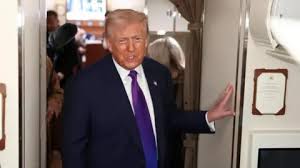
US President Donald Trump has publicly accused former President Barack Obama of disclosing classified information regarding extraterrestrial life during a recent podcast appearance. According to reports, Trump made the claim while addressing reporters aboard Air Force One, asserting that Obama 'made a big mistake' by stating that aliens are real. This accusation has sparked immediate controversy and raised questions about the boundaries of national security information and presidential communications.

Trump's remarks come as part of a broader pattern of political rhetoric involving UFOs and extraterrestrial phenomena, a topic that has gained significant traction in recent years. The former president's comments suggest a growing interest in government secrecy and the potential overlap between official intelligence operations and public discourse on unexplained aerial phenomena. Analysts speculate that Trump's comments reflect a desire to reframe the narrative around government transparency and national security, particularly in light of ongoing debates about the military’s role in investigating potential alien contact.

The controversy centers on a specific podcast episode where Obama reportedly discussed the possibility of extraterrestrial life. Trump's accusation of 'classified information' leakage has drawn criticism from experts who emphasize the lack of concrete evidence supporting the existence of extraterrestrial life. Critics argue that such statements can lead to unnecessary public anxiety and undermine trust in government institutions, especially when dealing with topics that have no scientific basis.

Legal experts have noted that the term 'classified information' typically refers to sensitive data that could compromise national security if disclosed without authorization. However, the context of this accusation—specifically, the claim that Obama discussed aliens being real—has been widely regarded as a political maneuver rather than a genuine security concern. The situation has been met with skepticism from scientists and researchers who stress the importance of distinguishing between scientific inquiry and state-sponsored secrecy.

As the debate continues, the implications of this accusation extend beyond the immediate political conflict. The incident highlights the challenges of maintaining public trust in government when sensitive topics like UFOs and extraterrestrial life are involved. It also underscores the need for clear guidelines on how classified information is handled, particularly when it comes to topics that are not supported by empirical evidence.

Experts warn that conflating legitimate intelligence operations with speculative discussions about aliens can create confusion and mislead the public. The potential for such statements to be interpreted as threats or misinformation is significant, especially in an era where social media amplifies unverified claims. The situation also raises questions about the role of former presidents in shaping public perception of government actions and the potential consequences of mixing scientific discourse with political rhetoric.