Baby Monkey's Emotional Bond with Stuffed IKEA Orangutan Sparks Global Internet Outcry

Editor 19 Feb, 2026 ... min lectura

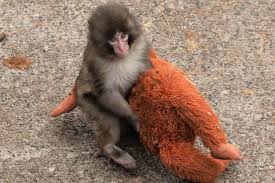
For a baby monkey named Punch (Punch-kun), life at Japan's Ichikawa City Zoo has been anything but ordinary. Rejected by his mother at birth, Punch found solace in a stuffed IKEA orangutan, a bond that has now captivated millions worldwide. This poignant story, initially shared by People.com, has taken on a new layer of meaning after Stephen Colbert highlighted it during his recent broadcast. The emotional connection between the young primate and his toy companion illustrates a profound need for companionship in the face of abandonment.

According to the People.com report, Punch was separated from his mother at the Ichikawa City Zoo in Japan. Without maternal care, the infant monkey was raised through hand-rearing by zookeepers. In the wild, this situation would have been fatal, but at the zoo, it became a survival strategy. This unique adaptation has led Punch to form an unbreakable bond with a stuffed IKEA orangutan, a critical source of comfort in his otherwise isolated life.

The story gained viral traction when a video of Punch clinging to his toy orangutan went viral on social media. The clip, which shows the small monkey repeatedly reaching for the plush toy, has been shared over 2 million times across platforms. The emotional impact of the video has sparked discussions about animal welfare, childhood trauma, and the psychological needs of young animals. Animal behaviorists emphasize that the bond between Punch and his toy is not just a simple attachment but a complex coping mechanism.

Stephen Colbert's recent mention of the story on his show has amplified its reach, with many viewers connecting the monkey's plight to broader themes of loneliness and human-animal relationships. The comedian's reference to the 'Punch the monkey' phenomenon has drawn attention to how even the smallest creatures can develop deep emotional connections with inanimate objects. This viral moment has also prompted animal care professionals to reconsider their approaches to orphaned animals, highlighting the importance of providing emotional support alongside physical care.

Animal welfare experts note that while stuffed animals are not the ideal substitute for live companionship, they can serve as vital emotional anchors for young animals in captivity. For Punch, the stuffed orangutan represents a critical lifeline, offering a sense of security and routine. The story underscores the complexities of animal cognition and the innate need for social bonds, even in the face of adversity.

The video has also sparked debates about the role of media in highlighting animal welfare issues. Critics argue that excessive focus on individual animals can overshadow systemic issues in wildlife conservation. However, supporters of the story emphasize its potential to drive awareness and action on animal welfare, particularly in the context of orphaned and hand-reared animals.

As the story continues to evolve, it raises important questions about how we treat and understand the emotional needs of animals. The case of Punch the monkey serves as a powerful reminder that even the smallest creatures can have profound emotional experiences, and that their well-being should be a priority in conservation efforts.