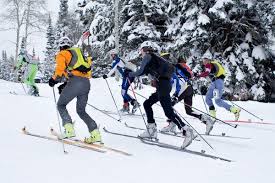
As the 2026 Winter Olympics in Milan-Cortina come to life, a groundbreaking addition to the Olympic program has captured global attention: ski mountaineering. This dynamic sport, previously absent from the Games, is now making its official Olympic debut. The inclusion of ski mountaineering represents a significant shift in how winter sports are perceived and celebrated, blending traditional alpine disciplines with the rugged terrain of mountainous regions.
The sport, known as 'skimo' in the Olympic community, involves athletes navigating steep, often unmarked trails through challenging mountainous landscapes. Unlike conventional alpine skiing, skimo emphasizes precision, agility, and strategic decision-making as competitors race against the clock to reach the summit of designated peaks. Each competition unfolds in a single, continuous run where athletes must balance speed with the ability to read the terrain and navigate complex obstacles.
One of the most prominent figures in this new discipline is Anna Gibson, a British skimo athlete who has quickly become a symbol of innovation and determination. Gibson’s journey to the Olympics began with her early experiments with the sport, showcasing her adaptability and technical mastery. Her performance at the Milan-Cortina Games has highlighted how skimo bridges the gap between high-stakes competition and the natural beauty of the mountains.
Organizers of the Winter Olympics have carefully structured the competition to ensure fairness and safety. Competitors must navigate a route that includes natural features such as cliffs, gullies, and rock formations, with the goal of completing the course in the shortest time possible. This structure allows for a diverse range of skills, from technical climbing to rapid decision-making under pressure.
The inclusion of ski mountaineering in the Winter Olympics marks a strategic move by the International Olympic Committee (IOC) to promote inclusivity and sustainability. By integrating a sport that emphasizes environmental awareness and respect for natural landscapes, the IOC aims to align with the growing global focus on eco-friendly practices in sports. The sport’s emphasis on minimizing environmental impact through careful route selection and conservation of natural features has been a key factor in its adoption.
The Milan-Cortina 2026 Winter Olympics serve as a pivotal moment for the evolution of winter sports. With skimo’s debut, the Games have expanded their scope beyond traditional disciplines, offering athletes new opportunities to showcase their abilities in varied and challenging conditions. This addition not only attracts new audiences but also provides a platform for athletes who have previously been overlooked due to the sport’s niche nature.
Looking ahead, the success of skimo at the Winter Olympics could inspire further innovations in winter sports programming. The IOC’s decision to include this sport reflects a broader trend of adapting to the changing needs of athletes and spectators, while maintaining the core values of the Olympics: excellence, respect, and sustainability.