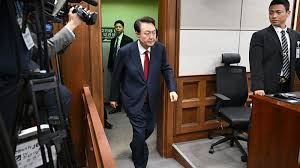
Former South Korean President Yoon Suk Yeol Sentenced to Life in Prison for Martial Law Attempt

Editor 19 Feb, 2026 ... min lectura

South Korean courts have delivered a landmark verdict against former President Yoon Suk Yeol, sentencing him to life imprisonment for his role in attempting to impose martial law in 2024. Prosecutors argued that Yoon's actions constituted a direct threat to South Korea's constitutional order, marking one of the most significant political upheavals since the country's democratic transition.

The ruling follows a series of legal proceedings that began after Yoon's controversial declaration of martial law in early 2024. During his first trial, prosecutors sought the death penalty, which was later reduced to a life sentence following a retrial. The decision, which came after a five-year prison term for obstruction of justice, underscores the severity of the charges against the former leader.

Yoon's defense team had argued that his actions were part of a broader strategy to address economic instability and public unrest. However, prosecutors maintained that the declaration of martial law was an unlawful attempt to bypass democratic processes, effectively dismantling the existing governance structure.

The case has drawn international attention, with experts highlighting its implications for South Korea's political stability and democratic norms. Analysts suggest that Yoon's actions could set a precedent for future leadership challenges in East Asian democracies, particularly in balancing national security concerns with constitutional safeguards.

Legal experts have noted that the verdict reflects a growing emphasis on judicial accountability in South Korean politics. The court's decision to impose a life sentence rather than the death penalty indicates a nuanced understanding of the legal and political context surrounding the case.

The trial itself was marked by intense scrutiny, with both sides presenting evidence of widespread public support for Yoon's actions. Supporters claimed that his measures were necessary to combat economic downturns and rising social tensions, while critics argued that the move was an authoritarian overreach that undermined democratic institutions.

South Korea's legal system has a history of balancing political and judicial oversight, and this case is a critical test of that system's resilience. The outcome could influence how future leaders navigate complex political and legal challenges within a democratic framework.

The case has also sparked discussions about the role of the judiciary in safeguarding democratic processes. With Yoon's actions seen as a potential threat to constitutional order, the court's decision emphasizes the importance of adhering to established legal procedures and the rule of law in South Korean governance.

International observers have noted that the verdict sends a clear message about the consequences of undermining democratic institutions. The ruling is expected to influence how South Korean citizens perceive the relationship between the executive and judicial branches of government.