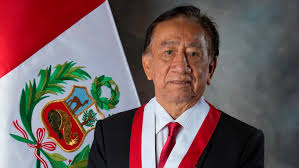
Peru's New President José María Balcázar: A Political Shift in the Eighth Successive Term

Editor 19 Feb, 2026 ... min lectura

The recent designation of José María Balcázar as Peru’s new president by Congress marks a significant shift in the country’s political landscape. At 83 years old, Balcázar, a left-wing figure, has been chosen not through popular election but via a parliamentary vote following a motion of censure against fellow politician José Jerí. This decision, made on February 19, 2026, highlights the complex dynamics within Peru’s constitutional framework and the challenges of maintaining political stability in a nation grappling with economic and social tensions.

The selection of Balcázar, who has been linked to allegations of ties with Chinese businesses and a group of women allegedly favored through state contracts, underscores the deepening political crisis in Peru. His appointment comes after a contentious political environment where the ruling coalition has faced criticism over corruption and inefficiency. The move reflects a broader trend of parliamentary maneuvering in countries with fragile democratic institutions.

Balcázar’s background as a left-wing advocate for social justice and economic equity has been a key factor in his political trajectory. However, his recent associations with Chinese entities have raised concerns about foreign influence and transparency in public procurement. The government’s focus on reducing poverty and improving infrastructure has been met with skepticism, particularly given the country’s high levels of inequality and limited economic diversification.

Peru’s economic stability, despite recent growth, remains a critical issue. While the country has seen modest improvements in GDP, inflation and unemployment continue to pose significant challenges. The international community, including the IMF, has been cautious about the political changes, emphasizing the need for clear governance and transparent policies to ensure sustainable development.

Analysts note that Balcázar’s leadership will likely focus on addressing the country’s structural issues, such as corruption and economic disparity. His appointment as the eighth president in a decade highlights the recurring political instability that has plagued Peru since the 2018 crisis. This transition, while seemingly progressive, may not resolve the underlying issues that have led to repeated political upheavals and economic volatility.

The decision to choose Balcázar over José Jerí, who was targeted by a motion of censure, signals a shift toward more conservative policies. However, Balcázar’s left-leaning approach to governance could create a paradox: balancing progressive reforms with the need for economic pragmatism. This tension is particularly acute in a country where political parties often struggle to deliver on promises without addressing systemic challenges.

Looking ahead, the international community will closely monitor Balcázar’s ability to navigate these complex issues. His leadership will be tested by the country’s persistent economic challenges, including high inflation, a weak currency, and a lack of diversified export markets. Without a clear strategy, Peru’s political and economic future remains uncertain.