ULA Vulcan Rocket Launches USSF-87 Mission from Cape Canaveral

Editor 12 Feb, 2026 ... min lectura

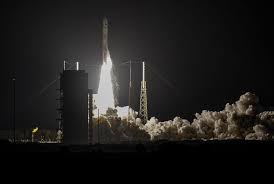
On February 12, 2026, at 4:22 a.m. EST, a United Launch Alliance (ULA) Vulcan rocket successfully lifted off from Launch Complex 41 at Cape Canaveral Space Force Station. This mission, designated USSF-87, marked a critical step in the United States Space Force's ongoing efforts to deploy advanced surveillance capabilities into geosynchronous orbit.

The Vulcan rocket, a key component of the U.S. space launch infrastructure, is designed to carry payloads for national security missions. This particular launch involved a complex payload configuration, including multiple satellites for the U.S. Space Force, which are crucial for monitoring and analyzing global activities. The launch took place during a period of heightened strategic interest in space-based surveillance systems, driven by evolving global security challenges and technological advancements in satellite technology.

The mission, which was part of a series of routine but high-stakes launches for the U.S. Space Force, aimed to deliver a suite of satellites designed to enhance the military's ability to track and analyze potential threats across various regions. These satellites are equipped with advanced sensors capable of capturing detailed imagery and data, providing real-time intelligence that is vital for decision-making processes in military operations and crisis management.

As the rocket ascended through the atmosphere, engineers monitored its performance closely, ensuring that all components were functioning within expected parameters. The successful launch of the USSF-87 mission highlights the continued reliability of the ULA Vulcan rocket, a workhorse of the American space program for over a decade. This capability is critical for maintaining the technological edge in space operations, particularly in the context of increasingly sophisticated threats to national security.

Despite the complexities involved in launching classified payloads, the mission proceeded smoothly without any significant issues reported during the initial phase of the flight. The use of the Vulcan rocket, which has a track record of delivering payloads for critical national security missions, underscores the U.S. commitment to maintaining robust and responsive space capabilities.

The launch also reflects the growing importance of space assets in modern military strategies. With the proliferation of space-based assets, the need for reliable and timely satellite data has become paramount. The USSF-87 mission is part of a broader effort to ensure that the U.S. remains at the forefront of space-based intelligence operations, capable of providing actionable intelligence to military commanders and policymakers.

The U.S. Space Force continues to prioritize the development and deployment of advanced surveillance systems, with this launch being a critical component of that strategy. As space becomes an increasingly contested domain, the ability to deploy and maintain effective space assets is essential for national security and strategic advantage.

For the U.S. Space Force, this mission represents a significant step forward in maintaining its ability to gather and process intelligence from space. The successful deployment of the USSF-87 mission demonstrates the ongoing capability of the U.S. to project power and gather critical data from orbit, ensuring that military and strategic decision-makers have access to the necessary information for effective operations.