Portugal’s architectural legacy is a narrative of resilience, innovation, and cultural evolution. From the early days of post-1974 reconstruction to the contemporary experiments in sustainable design, the country’s built environment reflects a complex dialogue between historical identity and forward-thinking practices. This article explores the 100 edificios do último meio século português (100 Portuguese buildings of the last half-century) featured in the Habitar Portugal 1974-2024 exhibition at Lisbon’s MAC/CCB, a project spearheaded by the Portuguese Architects’ Order (OA) and the Belém Cultural Centre Museum of Contemporary Art. The exhibition not only showcases iconic structures but also highlights how architecture serves as a living archive of national identity and socio-economic challenges.
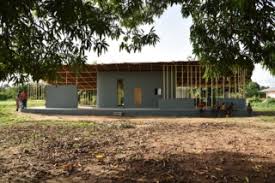
Among the most compelling examples is the five kindergarten gardens in Guinea-Bissau designed by the Colectivo Mel collective. These projects exemplify the power of community-driven construction, where local materials and collaborative efforts create spaces that are both functional and deeply rooted in cultural practices. The gardens, often built with minimal external resources, demonstrate how architecture can be a tool for social cohesion and environmental adaptation in resource-constrained contexts.
The exhibition also highlights three remarkable structures: a brutalist house designed by Francisco de Conceição Silva, an architect who fled to Brazil after the 25 de Abril, two buildings in Luanda by Paulo Moreira that showcase small, yet impactful gestures of solidarity, and several other projects that reflect the diverse economic and political landscapes across Portuguese-speaking nations. These works illustrate how architecture responds to specific historical moments, from the aftermath of the 1974 revolution to the present day, while maintaining a distinct Portuguese identity.
One of the most striking themes in the exhibition is the role of architecture in addressing contemporary challenges. For instance, the use of sustainable construction techniques, as emphasized by architects, has been shown to significantly enhance the longevity and resilience of buildings. The president of the Portuguese Architects’ Order has noted that decentralized urban planning in Portugal has led to increased security risks, highlighting the critical need for integrated approaches to urban development and infrastructure.
The Habitar Portugal 1974-2024 exhibition is more than a collection of buildings; it is a living testament to how architecture can tell the story of a nation. Each structure, from the modest kindergarten gardens to the monumental public spaces, reflects the evolving priorities and challenges faced by Portuguese society over the past five decades. This initiative not only celebrates the diversity of architectural practices but also underscores the importance of context-specific solutions in shaping a sustainable and inclusive built environment.