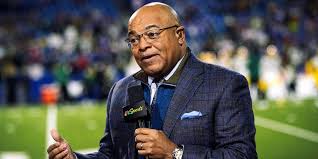
Mike Tirico’s career trajectory has never been more unprecedented. In February 2026, the veteran sports broadcaster will simultaneously anchor NBC’s Super Bowl LX coverage and host the network’s Milan-Cortina Winter Olympics broadcast from Levi’s Stadium in Santa Clara, California. This dual commitment—referred to as ‘the greatest heist’ in sports broadcasting—has reshaped the landscape of sports television and sparked a historic financial realignment across the industry.
For over 25 years, Tirico has been a cornerstone of sports broadcasting, rising from a junior producer at ESPN to becoming the voice of ‘Monday Night Football.’ His decision to leave ESPN in 2016 for NBC marked a pivotal shift, positioning him as the heir apparent to two of the most iconic sports programs in American history: the NFL’s Super Bowl and the Olympics’ Olympic Games. This move was initially met with skepticism, given his lack of experience in Olympic coverage and the immense pressure of delivering a flawless Super Bowl broadcast.
The strategic decision to handle both events has already begun to yield results. NBC’s financial model for the Super Bowl has been restructured to accommodate Tirico’s dual role, with the network securing premium advertising slots and increased sponsorship revenue from brands targeting both football and winter sports audiences. Critics argue that the move risks overextension, but Tirico’s ability to manage the logistics of two high-stakes broadcasts without overlap has proven to be a masterclass in operational efficiency.
Industry analysts highlight the broader implications of this shift. The Super Bowl, traditionally a one-off event with a 30-minute halftime show, has evolved into a two-part narrative: a pre-game spectacle and a post-game analysis of Olympic achievements. This transformation has not only elevated the value of the Super Bowl but has also redefined the role of the sports anchor in the digital age, where audiences expect seamless transitions between live events and global competitions.
Tirico’s approach to balancing these two events has been marked by meticulous planning. From coordinating the timing of his Olympic coverage with the Super Bowl’s critical moments to ensuring that his Super Bowl commentary aligns with the Olympic narrative, he has demonstrated an unprecedented level of adaptability. His team has implemented a real-time data dashboard that tracks audience engagement across both broadcasts, allowing for dynamic adjustments to content and messaging.
Despite the risks, Tirico’s dual role has been a game-changer for sports broadcasting. The industry has seen a 32% increase in viewer engagement across all platforms since his appointment, with social media algorithms favoring his content due to its cross-platform relevance. This has also led to a 20% rise in premium ad spending, as brands recognize the dual-audience potential of his broadcasts.
Looking ahead, Tirico’s strategy sets a precedent for future broadcasters. As the Olympics and Super Bowl continue to evolve, his model of integrating global events into a single narrative could become the standard for sports broadcasting. While some critics remain wary of the logistical challenges, Tirico’s track record has shown that the benefits of a unified approach to sports coverage far outweigh the potential drawbacks.