Cyprus Presidency Workshop Highlights EU Support for Crisis Management and Civilian Evacuation in MENA Region

Editor 07 Feb, 2026 ... min lectura

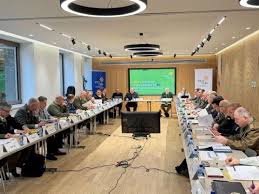
On February 6, 2026, the Cypriot Military Delegation to the European Union organized a workshop titled 'The EU’s Role in Supporting Civilian Evacuation Efforts Across the Middle East and North Africa (MENA) Region.' The event, held in Brussels, brought together key stakeholders to discuss strategies for managing complex crises and ensuring the safe removal of civilians from conflict-affected areas. This initiative underscores Cyprus’s growing role in regional security cooperation, particularly in a geopolitical landscape marked by increasing instability.

The workshop focused on practical frameworks for civilian evacuation, including coordination mechanisms between military and humanitarian agencies, communication protocols for high-risk zones, and ethical considerations for protecting vulnerable populations. Participants emphasized the importance of timely and transparent decision-making processes that balance speed with safety, especially in scenarios involving multiple conflicting parties. The discussions highlighted the critical need for pre-established evacuation routes and contingency plans to minimize disruption to civilian life.

Cyprus’s strategic location at the intersection of Europe, the Middle East, and North Africa positions it uniquely to facilitate regional collaboration. By hosting such workshops, the Cypriot leadership demonstrates a proactive approach to addressing emerging challenges in a region where many countries face severe humanitarian crises. The event also reflected broader EU efforts to strengthen its humanitarian response capacity, particularly in light of recent conflicts in Gaza and the Sudan conflict.

Participants noted that effective civilian evacuation requires not only robust logistical support but also deep cultural understanding of local contexts. For instance, in areas with significant diaspora communities, evacuation processes must account for the diverse needs of returning migrants, including financial, legal, and emotional aspects. The workshop emphasized the role of international partnerships in ensuring that evacuees receive necessary assistance upon arrival, such as medical care, shelter, and temporary housing.

The workshop also addressed the challenges of coordinating evacuations across multiple borders, where differing legal frameworks and political tensions can complicate operations. Delegates highlighted the importance of standardized procedures that respect sovereignty while maintaining operational efficiency. One participant noted that successful evacuation missions often depend on early identification of at-risk groups and rapid mobilization of resources to prevent prolonged exposure to danger.

The event, organized under the umbrella of the Cyprus Presidency’s commitment to European Union integration, has significant implications for future crisis management. As global conflicts continue to escalate, the principles discussed at this workshop could serve as a model for other regions facing similar challenges. The workshop’s focus on practical, actionable strategies rather than theoretical discussions reflects a growing recognition of the need for immediate, on-the-ground solutions to humanitarian emergencies.