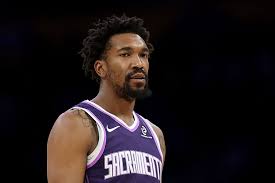
Malik Monk's Trade Potential and the Warriors' Strategic Calculations

Editor 07 Feb, 2026 ... min lectura

The recent trade negotiations between the Sacramento Kings and Golden State Warriors have revealed significant strategic considerations that could reshape the NBA landscape. According to sources close to the Kings, the team has explored a potential trade involving guard Malik Monk, a key player in their roster, to secure a valuable asset from the Warriors. This move was part of a broader effort to strengthen their position in the competitive Western Conference.

Jonathan Kuminga, the former seventh-overall pick, was a focal point of discussions between the Kings and Warriors. His departure to the Atlanta Hawks for Kristaps Porzingis has raised questions about the Kings' future in securing similar high-value players. The Kings' attempts to trade Kuminga for a future protected first-round pick have been met with resistance from the Warriors, who have maintained a cautious stance toward additional trade offers.

Malik Monk, a versatile and dynamic player, has been identified as a potential asset for the Kings. His ability to contribute offensively and defensively makes him a valuable trade piece. However, the Warriors have expressed concerns about his compatibility with their current roster, particularly given his role as a secondary option to their star guards.

The Kings' strategy revolves around balancing short-term needs with long-term planning. With the Warriors’ recent focus on maintaining a strong core, the Kings have been cautious about making moves that could disrupt their existing structure. This decision reflects a broader trend in the NBA where teams often prioritize stability over immediate gains.

Analysts suggest that the Kings' reluctance to trade Monk could be tied to his role as a high-impact player who can adapt to various offensive schemes. His presence in the lineup provides versatility, which is crucial for a team that aims to compete in the playoffs.

The trade landscape has become increasingly complex as teams navigate the nuances of salary cap restrictions and competitive dynamics. The Kings' focus on securing assets without compromising their current roster has led to a more calculated approach to trade negotiations.

Furthermore, the Warriors' decision to not welcome Monk highlights the delicate balance teams must maintain when dealing with players who have significant value but also potential conflicts with existing players. This situation underscores the importance of alignment between team philosophies and player roles.

As the NBA season progresses, the Kings' ability to secure key assets will be crucial for their success in the playoffs. The Warriors' stance on Monk serves as a cautionary tale for teams that attempt to trade players with unique skill sets without proper integration.