US Mineral Stockpile Decline: Charles Payne Calls It a 'Self-Inflicted Wound'

Editor 06 Feb, 2026 ... min lectura

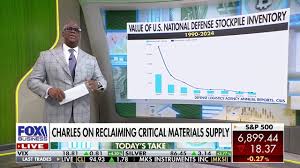
On February 4, 2026, Fox Business host Charles Payne highlighted a critical issue in the U.S. defense strategy during his show 'Making Money With Charles Payne.' He emphasized that the declining value of the nation's strategic mineral stockpile represents a significant self-inflicted problem for national security.

The U.S. government maintains a substantial inventory of critical minerals, including rare earth elements essential for advanced military technologies. However, recent market analysis shows these stocks have lost considerable value due to prolonged underutilization. Payne pointed out that this decline reflects a lack of proactive management in defense procurement, leading to critical supply chain vulnerabilities.

Charles Payne, known for his expertise in market dynamics and defense spending, argues that the federal government's approach to managing these strategic reserves has become outdated. He explained that as global demand for rare earth minerals increases, the U.S. has failed to adjust its stockpiling strategies, resulting in a shrinking inventory that no longer supports critical defense needs.

The issue has drawn attention from defense analysts who warn that without immediate action, the U.S. could face disruptions in critical mineral supply chains. Payne highlighted that the stockpile's decline is not merely an economic issue but a strategic risk that could impact military readiness and technological competitiveness.

Experts estimate that the U.S. strategic mineral stockpile currently holds less than 10% of the required reserves for critical defense applications. This shortfall creates a vulnerability that could be exploited by adversaries seeking to disrupt U.S. military operations. Payne stressed that the government must prioritize the reallocation and replenishment of these resources to prevent potential supply chain gaps.

The discussion also touched on the broader implications of mineral stockpiling for national security. Payne noted that the U.S. has been slow to adapt its stockpile management practices to evolving global market dynamics, resulting in a system that no longer aligns with current defense requirements.

With the global supply of rare earth minerals increasingly concentrated in a few countries, the U.S. must act quickly to secure alternative sources and improve its stockpile management. Payne suggested that a comprehensive review of the stockpile program could help restore confidence in the nation's ability to sustain critical defense capabilities.

Defense officials have acknowledged the need for improvement, but implementation challenges remain. The Department of Defense has proposed several initiatives to address the issue, including partnerships with private sector producers and increased monitoring of stockpile levels.

As the U.S. continues to rely on its strategic mineral stockpile for critical defense operations, Payne's warning serves as a timely reminder of the importance of proactive resource management. The issue underscores the intersection of economic policy and national security, highlighting how financial decisions can have profound implications for military preparedness.