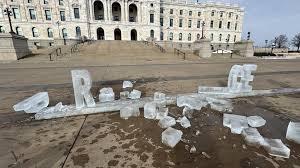
A striking ice sculpture titled 'Prosecute ICE' was unveiled outside the Minnesota State Capitol on Thursday, sparking immediate controversy and swift destruction within hours of its installation. The artwork, created by members of the veterans organization Common Defense and local community leaders, aimed to protest federal immigration policies and the recent deaths of two women, Renee Good and another individual, linked to federal actions. The sculpture's rapid dismantling by authorities highlighted tensions between grassroots activism and government response to public safety concerns.
Common Defense, a veterans-led group known for advocating against federal overreach, has long criticized the federal government's handling of immigration enforcement. Their decision to create this ice sculpture was a bold move to draw attention to the human cost of immigration policies, particularly in light of recent tragedies affecting communities in Minnesota. The group emphasized that the sculpture was intended to symbolize the urgency of holding federal agencies accountable for systemic issues within the immigration system.
Within hours of the unveiling, the ice structure was removed by state officials, citing safety concerns related to its location near the Capitol building. The incident has raised questions about the role of public art in political expression and how authorities respond to potentially disruptive installations in sensitive government spaces.
The sculpture's creators, including Jake Lang, a pardoned January 6th rioter, faced immediate backlash from authorities who deemed the installation a safety hazard. Lang's involvement has drawn additional scrutiny, given his history of legal issues and prior imprisonment. His role in the project underscores the complex interplay between personal accountability and collective action in civil disobedience movements.
Minnesota's state government has not yet provided a formal statement regarding the removal, but officials have indicated that the decision was made to prevent potential hazards. The incident has sparked discussions about the boundaries of protest art and the balance between free speech and public safety.
Advocates argue that such installations are vital for raising awareness about issues that might otherwise be ignored by policymakers. Critics, however, contend that the rapid removal of the sculpture reflects a broader pattern of suppressing dissent through procedural and safety measures.
The 'Prosecute ICE' project represents a growing trend of using art to drive political change. While the immediate removal of the sculpture has been criticized by some as a premature response, supporters stress that the project's intent was to provoke critical dialogue on immigration policies.
As the debate continues, the incident highlights the challenges faced by activists seeking to translate their messages into tangible actions without compromising public safety. The fate of the ice sculpture remains a symbol of the ongoing struggle between civil disobedience and governmental authority.