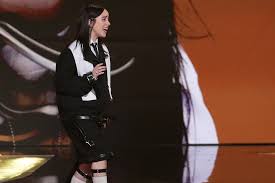
Billie Eilish's politically charged Grammy Award acceptance speech has ignited a national conversation about American identity and the concept of 'stolen land.' The young artist, known for her bold and unapologetic style, addressed the issue of Indigenous land rights and systemic oppression in her remarks, sparking both praise and controversy. Her comments about the United States being built on 'stolen land' have been widely interpreted as a critique of historical colonialism and the ongoing struggles of Indigenous communities.
The controversy began after Eilish delivered her speech at the 2026 Grammy Awards, where she directly challenged the government's role in perpetuating injustice. She highlighted the displacement of Native American tribes and the legacy of colonialism, framing her message as a call to action for awareness and accountability. Critics, however, have accused her of misrepresenting complex historical issues, arguing that her message lacks nuance and oversimplifies the issue of land ownership.
Finneas O'Connell, Eilish's songwriting partner and brother, has publicly supported her stance, defending her right to address these critical issues. In a recent statement, Finneas criticized critics who label Eilish as 'thieves' for her comments, arguing that the backlash is rooted in a lack of understanding of the historical context behind her message. He emphasized that Eilish's focus on 'stolen land' is a direct reference to the legacy of colonialism and the ongoing struggles of Indigenous communities.
Supporters of Eilish's message argue that it resonates with current movements advocating for Indigenous rights and environmental justice. They see her speech as a powerful tool for raising awareness about the historical and ongoing impacts of colonialism. The phrase 'stolen land' has become a symbol of resistance against the notion that American land is 'unstolen,' reflecting a broader critique of the nation's foundation on stolen territory.
The debate has also highlighted the role of social media in shaping public discourse. Critics have accused Eilish of using her platform to advance a political agenda, while supporters argue that her message is a genuine call for social justice. The controversy has drawn attention to the challenges faced by artists who choose to address complex societal issues through their work.
As the conversation continues, it is clear that Eilish's speech has become a focal point for discussions about the intersection of art, politics, and identity. Her message about 'stolen land' has sparked a deeper examination of how the United States has been built on the exploitation of Indigenous peoples and the need for acknowledgment of this history.
The controversy has also raised questions about the role of artists in addressing social issues. Eilish's decision to speak openly about systemic issues has been praised by many as a courageous move, while others view it as a departure from the traditional role of the artist as a neutral observer.
Further analysis of the context shows that Eilish's message is deeply rooted in her personal experiences growing up in a family with Indigenous heritage. Her comments reflect a nuanced understanding of the historical and cultural significance of land and its relationship to identity and community.